

Technology
CIR is committed to advancing its mission through the innovative use of technology, as well as through the development and use of new technologies. Leveraging the USC School of Social Work’s resources through partnerships with key leaders in this field, CIR supports far-reaching academic and professional development activities by building and incorporating technology into behavioral healthcare provider education and therapeutic skill development. CIR also works collaboratively with other entities in the development of innovative technologies that have direct applications for military behavioral health consumers, such as telehealthcare and online behavioral health intervention models. CIR’s innovative technology projects include:
The “Virtual Patient”
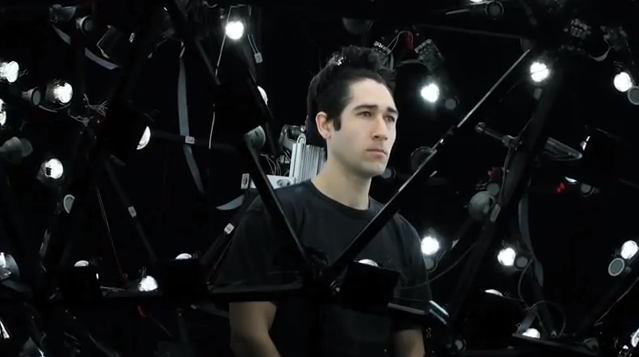
Working closely with USC Institute for Creative Technologies (ICT), CIR is currently developing a virtual human avatar —the Virtual Patient (VP)—for use in both online and on-ground “face-to-face” teaching environments in order to strengthen learning outcomes. The program’s first Virtual Patient–Alamar Castilla, a fictitious Marine–will be artificially intelligent and programmed to simulate a veteran who has been exposed to combat stress. Its purpose is to provide current and future therapists with the opportunity to advance their skills in treating servicemembers, veterans, or military-impacted family members through practice with a realistic patient.
Building the Virtual Patient (2011)
Progress Update on the Virtual Patient (2012)
CIR will conduct sophisticated evaluations and research of its Virtual Patient technology in order to validate results in the areas of learning, development of practice skills, and client outcomes. For example, CIR will conduct a study to determine the impact that practicing with the Virtual Patient has on these outcomes. These evaluation efforts will be conducted both internally, and through collaboration with external partners.
MILES
The Motivational Interviewing Learning Environment and Simulation (MILES) is a virtual reality project developed by the USC Center for Innovation and Research on Veterans and Military Families (CIR), in partnership with the USC Institute for Creative Technologies (ICT).
Now embedded in the USC School of Social Work, MILES provides future therapists the opportunity to advance their skills in treating service members, veterans, or military-impacted family members through practice with a simulated patient. This exciting teaching tool allows instructors to guide social work students through a therapist-client interaction with a simulated veteran using a multiple choice-style progression through a therapy session.
Clinical Skill Assessment Tool
CIR’s Clinical Skill Assessment was developed to assess military-relevant clinical skills in a timely and cost-efficient way. Developed in part as an alternative to a live standardized patient, the CIR measure is informed by the work of leaders in social work clinical assessment at the University of Toronto , and as well as a standardized video measure that was used to measure skill development among Dutch medical students.
The CIR measure is computer-administrated and asks clinicians to respond to 14 video clips of a veteran/therapist interaction. Responses are scored in the domains of rapport building, appropriate communication and cultural awareness, unique issues relevant to military context, legal and ethical issues relevant to military-impacted clients, and culturally-informed client assessment. A validation study of the measure is currently underway.
Telehealth for Clinical Psychotherapy Services
CIR is developing new telehealth and web-based technology tools to deliver clinical psychotherapy services to real clients, including veterans and their families. For military clients, this would provide greater privacy and help address some of the negative stigma in the military community regarding seeking therapy or help for emotional or mental challenges. CIR will conduct evaluations of the effectiveness of these telehealth tools.
Other Related Plans/Projects
CIR is also pursuing other technology-related projects that hold promise for the future. This includes developing a 3-way partnership with the University and one or more independent, for-profit technology companies to refine and license some of the advanced teaching tools developed by CIR for other fields of study.


